Water Damage Restoration Rochester, MN
Burst pipe, ice dam or a basement full of snowmelt? The Rochester restoration team extracts standing water, dries the structure to the IICRC S500 standard and documents every step for your insurance claim.
(888) 432-4933Start the Rochester dry-out now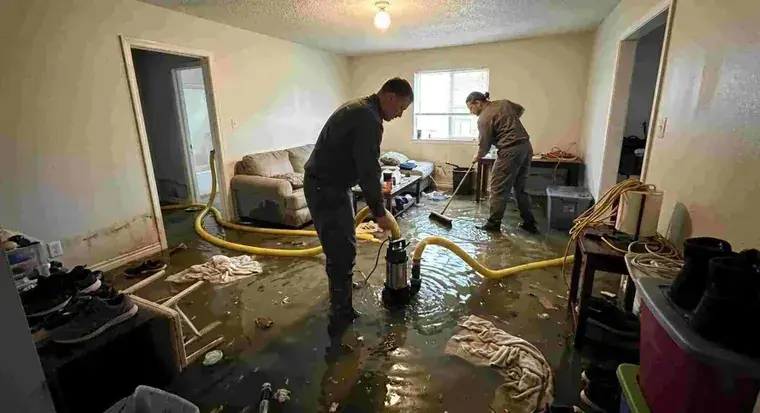
What to do while the water is still moving
- 1
Shut the main. The valve usually sits on the front basement wall where the water line comes in.
- 2
Kill wet circuits. Only from a dry panel, and stay out of standing water near outlets and appliances.
- 3
Photograph first. Take pictures of every wet room before anything is moved or thrown out.
- 4
Lift, then call. Get rugs and boxes off the floor and call; mold can start inside 24 to 48 hours.
Water Damage Restoration Services in Rochester, MN
Water and sewage only, from the first extraction pass to the final dry reading, across Rochester and Olmsted County.
 Category 1 to 3Water ExtractionTruck-mounted extraction pulls standing water out of carpet, pad and slab before anything else.View service
 Category 1 to 3Basement Flooding CleanupFinished lower levels pumped out, opened where needed and dried to a verified reading.View service
 Category 2Sump Pump Failure CleanupA dead pump or a storm power cut floods the pit corner, then the rest of the basement.View service
 Category 3Sewer Backup CleanupFloor-drain backups contained, soaked porous materials removed and surfaces treated.View service
 Category 2Spring Thaw Seepage CleanupSnowmelt pushing through block walls and the cove joint every March and April.View service
 Category 3Flood CleanupSurface water from the Zumbro River, its creeks or a summer cloudburst, pulled out and disinfected.View service
 Category 1Frozen Pipe CleanupDeep-cold splits on outside walls and over garages that let go the moment the line thaws.View service
 Category 1Burst Pipe CleanupFailed fittings and tired galvanized lines, extracted and dried inside the wall cavity.View service
 Category 1 to 2Ice Dam Water DamageRoof-edge ice that backs meltwater under shingles and into walls, ceilings and insulation.View service
 Category 1 to 2Ceiling Leak Water DamageUpstairs bath and laundry leaks that sag drywall and reach the light fixtures below.View service
 Category 1Water Heater Failure CleanupA ruptured tank in the utility room, extracted before it wicks into finished space.View service
 Category 1 to 2Appliance Supply Line Leak CleanupWasher hoses, fridge lines and dishwasher leaks traced and dried under the flooring.View service
 All classesStructural DryingFraming, subfloor and wall cavities dried to the IICRC S500 goal, not just the surface.View service
 Category 1 to 3Commercial Water DamageOffices, retail, multifamily and medical-office buildings dried with the least downtime.View service
Ice dams, spring thaw and summer storms
Water damage here follows the seasons, and the restoration team plans equipment around them.
Winter
December to FebruaryDeep cold splits supply lines on outside walls, and wind-drifted snow builds ice dams at the eaves.
Spring thaw
March and AprilA season of melting snow over still-frozen ground pushes water through block walls and the cove joint.
Storm season
June to AugustCloudbursts overload storm and sanitary sewers, and floor drains in older homes back up.
Fall
September to NovemberLeaves clog gutters and downspouts, and the first hard freeze finds garden hoses still connected.
Water damage dried to the IICRC S500 standard
Structural drying, not just surface drying. The order of the work is what separates a finished dry-out from a cosmetic one.
- 01
Moisture mapping
The tech who does the walkthrough maps wet materials with pinless meters and thermal imaging before any equipment goes down.
- 02
Truck-mounted extraction
The extraction crew pulls standing water with truck-mounted units, so the water leaves the building instead of moving to the next room.
- 03
Air movers and LGR dehumidifiers
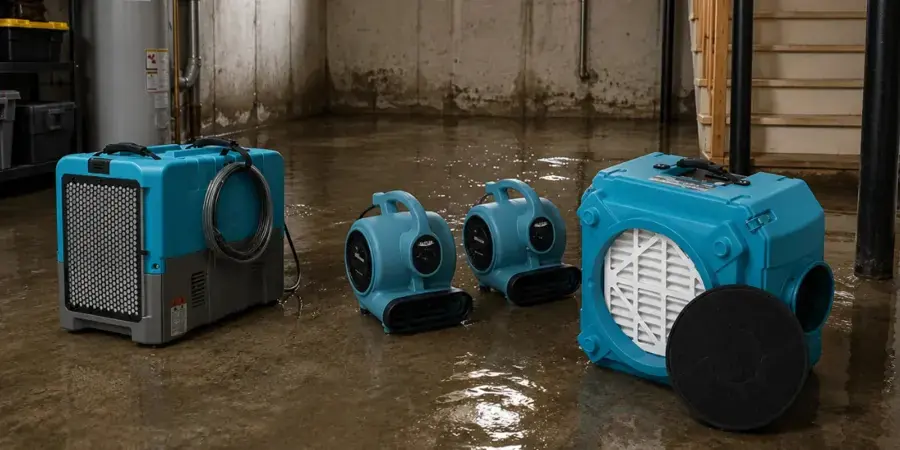
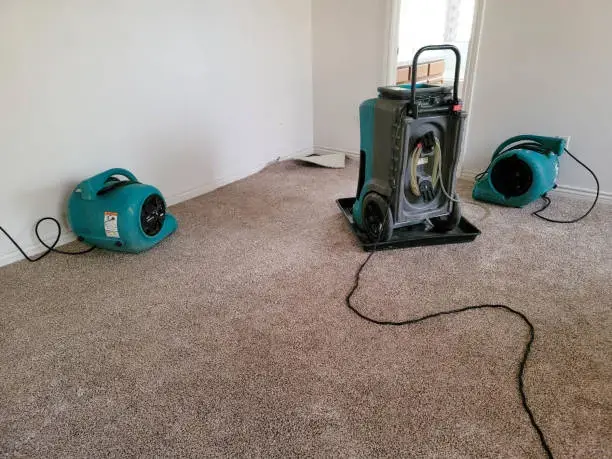
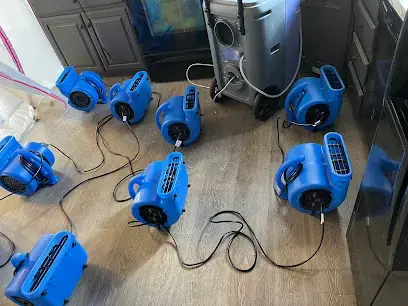
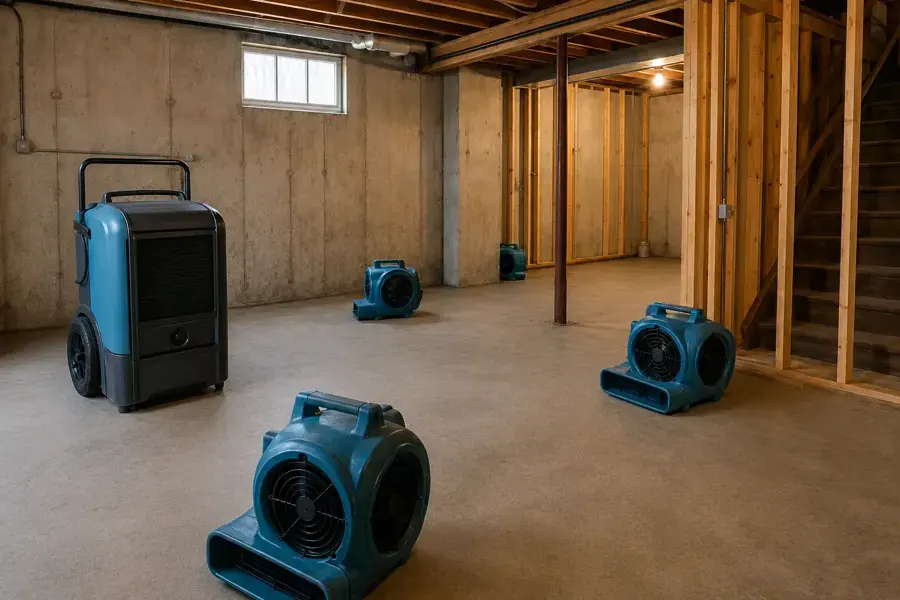
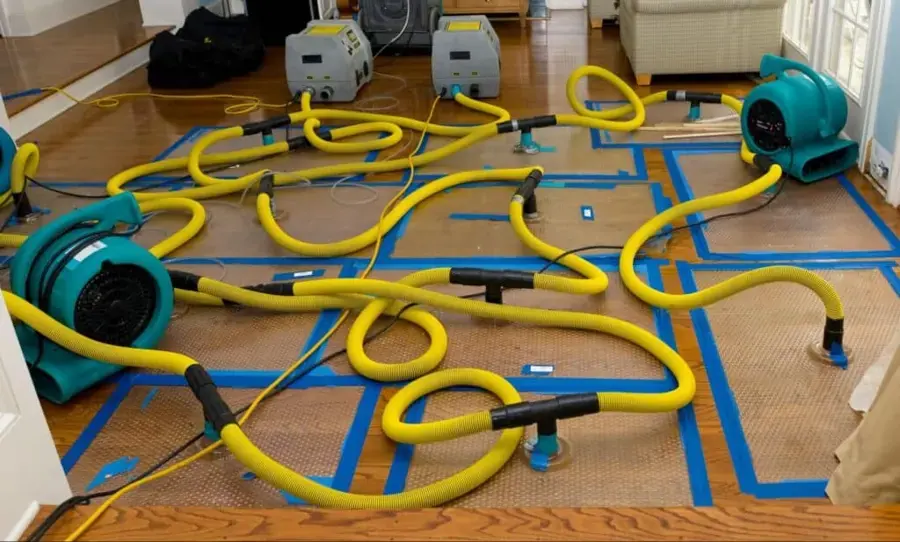
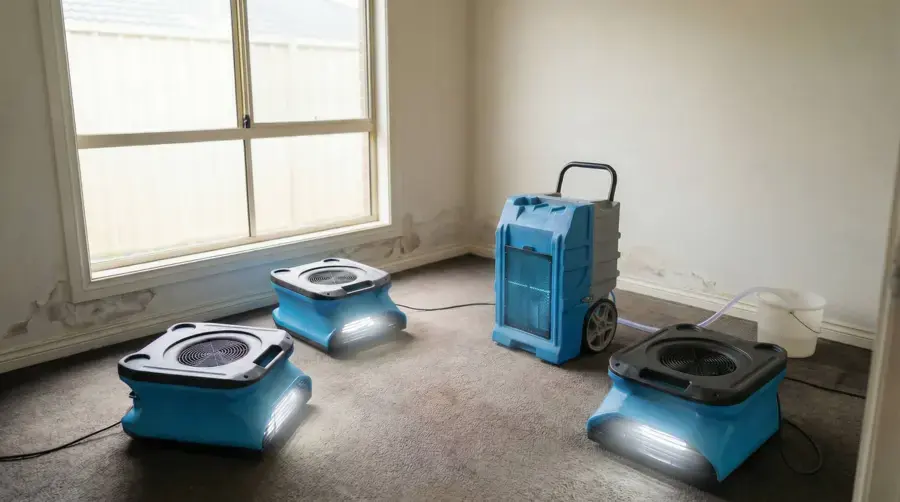
The drying team sets air movers to each room's evaporation load and LGR dehumidifiers pull that moisture back out of the air; desiccants handle dense Class 4 materials.
- 04
Daily readings
Most crews record moisture and psychrometric readings every day, and the drying plan changes when the numbers do.
- 05
Dry verification
Equipment comes out when wet materials read within 2 to 4 points of a dry reference material, not when the surface looks dry.
The standard on every job
- IICRC S500 drying standard
- Truck-mounted extraction
- Daily moisture readings
- Structural drying, not just surface
- Containment and HEPA air scrubbers on contaminated losses
Documentation for your insurance claim
A water claim is decided on the file. A complete file carries the moisture map from day one, daily drying logs, timestamped photos taken before any demolition and the category and class of the loss.
Sudden and accidental discharge, like a burst supply line, is treated differently from rising surface water, which falls under flood coverage. Coverage depends on your policy, so it is worth checking with your own insurer.
What does water damage restoration cost in Rochester, MN?
In Rochester, MN, water damage restoration typically runs $1,200 to $9,000 or more, depending on the water category, how far it spread, the material class and how fast drying started.
- Category 1 clean water
- Extraction plus three to five drying days
- Little or no material removal
- Carpet pad and lower drywall removed
- Air movers, LGR units, daily readings
- Flood cuts where cavities stay wet
- Category 3 containment and removal
- HEPA air scrubbers and antimicrobial
- Large areas or more than one level
Want a closer number? Try the water damage cost calculator or the drying time estimator. These are typical ranges, not quotes.
Rochester water damage restoration experts
Water behaves a particular way in Rochester. Deep frost, a long snow season and a fast thaw put water into basements that stay dry the rest of the year, and older blocks near downtown still drain through clay tile laterals. The Rochester restoration crew plans for all of it.
The team answers 24/7, extracts standing water with truck-mounted equipment, dries the structure to the IICRC S500 goal and hands over a drying file an adjuster can read.
How the work is done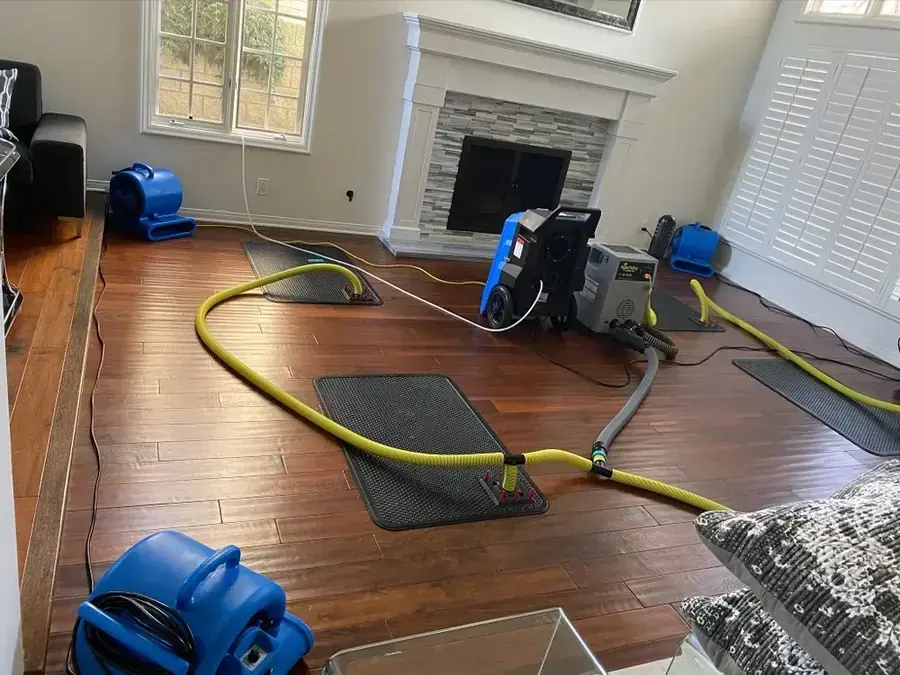
What a water damage dry-out looks like in Rochester
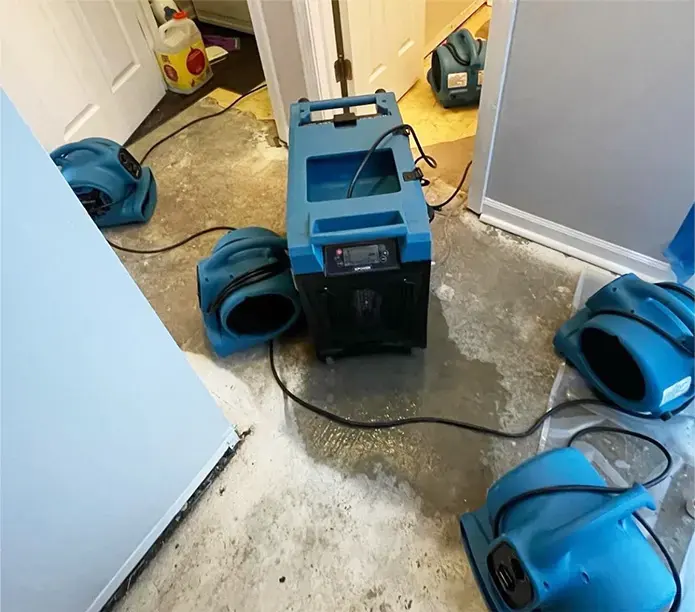
All water damage categories covered in Rochester, MN
Clean, gray or black, the category decides what can be dried in place and what has to go.
Clean water
From a supply line, a burst pipe or a water heater. Extracted and dried in place before it sits long enough to turn.
Gray water
From a washer, a dishwasher or seepage through a basement wall. It carries contamination, so soaked pad and trim usually come out.
Black water
Sewer backups and floodwater. Contained, porous materials removed and surfaces treated with an EPA-registered antimicrobial.
Sewer backup cleanupWater damage restoration across Rochester, MN
The Rochester restoration crew works every Rochester ZIP and the Olmsted County towns around it, day or night.
Rochester ZIP codes covered
Downtown and the historic core
Downtown RochesterPill HillKutzky ParkHistoric SouthwestSlatterly ParkFolwell
North and northwest
NorthropElton HillsKings RunCascade LakeManor Park
South and southwest
Country Club ManorBaihly WoodlandMeadow ParkBamber Valley
East side
EastwoodSunset TerraceSilver Lake
Nearby Olmsted and Dodge County
ByronStewartvilleKassonPine IslandOronocoEyotaChatfield
Rochester water damage pros, on call 24/7
The restoration team works every Rochester ZIP from 55901 to 55906 plus Byron, Stewartville, Kasson and Pine Island. Have the cross street ready and say which level of the house is wet, because that decides what equipment goes on the truck.
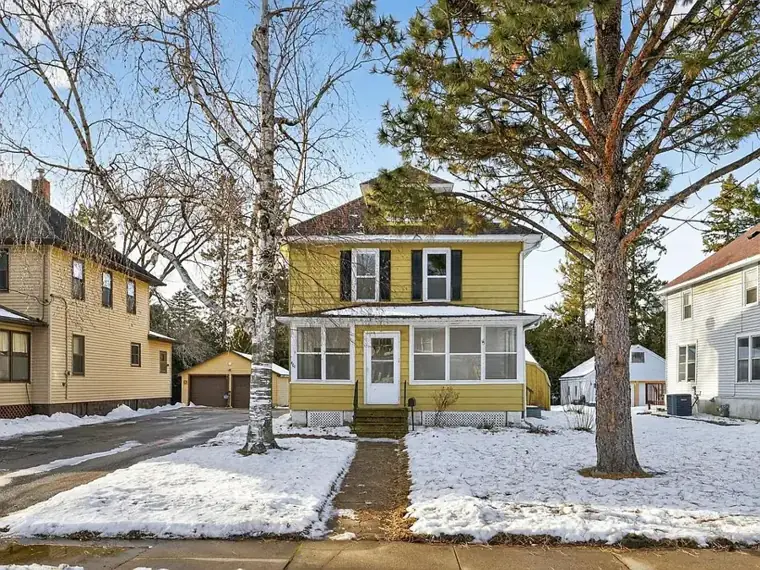
Why Rochester homes take on water
Rochester sits on an open, windy plateau along the South Fork of the Zumbro River, and its housing spans more than a century.
- Pre-war homes on Pill Hill, Kutzky Park and Historic Southwest drain through cast iron and clay tile laterals that crack and root, so summer storms push sewage up through floor drains.
- Wind drifts snow onto roofs across the plateau, and ice dams form on shaded eaves in Country Club Manor and Baihly Woodland.
- The March and April thaw sends snowmelt through block walls and cove joints while the ground below is still frozen.
- Heavy rain still overloads storm drains near the Zumbro River, Bear Creek and Cascade Creek, even after the channel work that followed the July 1978 flood.
Rochester water damage questions, answered
Plain answers on water damage restoration in Rochester homes, from the first hour to the insurance file.
(888) 432-4933Water still moving? Call Rochester now.How fast can someone respond in Rochester?
Rochester water damage pros answer 24/7, and dispatch starts on the first call, weekends included. Timing depends on roads, weather and how many homes a storm hits, so shut off the water and start the first steps meanwhile.
Is water damage covered by insurance in Minnesota?
Most policies cover sudden and accidental water, like a burst pipe, after the deductible. Surface flooding usually needs a flood policy, and sewer backup is often an add-on. Coverage depends on your policy, so it is worth checking with your own insurer.
What causes most water damage in Rochester?
Frozen and burst pipes in deep cold, ice dams on drifted roofs, snowmelt seepage during the spring thaw and sewer backups during summer storms. Water heaters and washer hoses round out the list all year.
How long does drying a wet house take?
A contained Class 1 loss usually dries in three to five days. Hardwood, plaster and block walls take longer. The drying team pulls equipment when readings match a dry reference material, not on a calendar date.
What is the IICRC S500?
It is the industry standard for professional water damage restoration. It sets how water is categorized, how the drying plan is sized to the class of loss and how the dry goal is verified with readings.
Does wet drywall always have to come out?
No. Drywall wet with clean water and caught early can often be dried in place. Drywall touched by Category 3 water, or swollen and crumbling, comes out with a flood cut above the waterline.
Why is a sewer backup handled differently?
Sewage is Category 3 the moment it happens. The crew sets containment, wears protective gear, removes the porous materials the water touched and treats surfaces with an EPA-registered antimicrobial before drying starts.
How is the cost of water damage restoration worked out?
By the category of water, the square footage, the material class and how fast drying started. The cost calculator gives a typical range.
Is mitigation the same as repair?
No. Mitigation stops the damage: extraction, drying and cleaning. Repair, meaning new drywall, flooring and paint, is a separate phase that starts after the structure is dry.
Water in your Rochester home? Start the dry-out now.
Water that sits keeps moving into subfloor, drywall and trim. The Rochester restoration team answers day or night.